The Red Urchin Time and Priority Management ecosystem is built on a set of key principles and processes, tried and tested by thousands of users since 2011, to give you the most effective time and priority management system available.
Our complete time and priority management system has two major parts: the underlying principles, rules and processes that are the guiding foundations of the ecosystem, and the Red Urchin application that puts them to work for you.
The Red Urchin application is the critical component at the centre of the ecosystem, but it is the simple principles and processes you follow around it that make it the most effective time and priority management system on the planet.
To understand the Red Urchin ecosystem, we need to start with an overview of what you are looking to achieve. What does success look like when we manage our time well? What do we actually want to achieve, and what do we need in order to get there?
We know from working with our customers that the answer is different for everyone. There are common goals, but people rank them differently.
These are the goals people are typically trying to achieve when they adopt a time management system:
- To complete "everything" they need to get done in a given period (we explain what "everything" means later)
- To stop forgetting important, critical or promised tasks
- To achieve more in the same amount of time
- To use their available time more effectively
- To free up time for the things they normally do not "have time for"
At Red Urchin, we have developed the following as our template for an effective time and priority management system.
Once we know what we are trying to achieve, the diagram below shows the key components we need to get there.
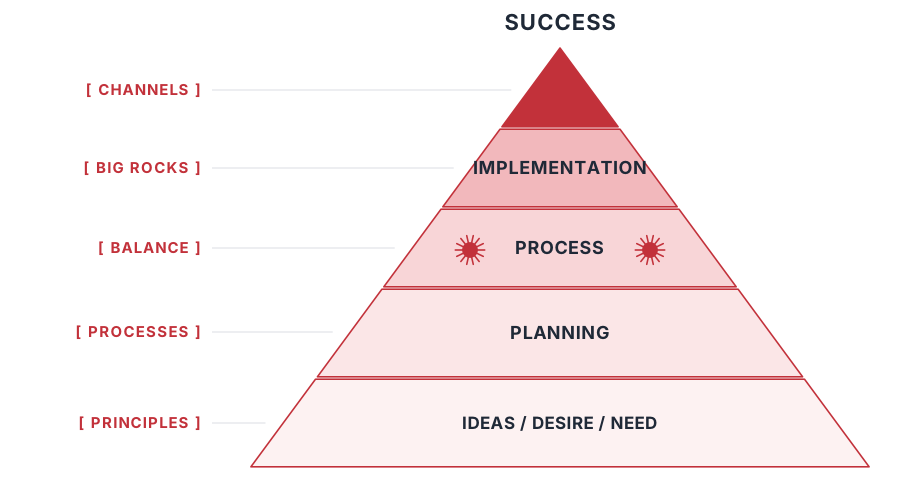
The ecosystem starts with the ideas, needs and desires of what we wish to achieve. These can be anything — a goal, a task, a project, the need to pick up the kids, climb a mountain, or go to a meeting. Without these building blocks there is nothing to plan, nothing to process and no activities to do. But on their own, with no grouping, planning or order, they are just a pile of things to do at some point in time. You have no way of knowing which is the main objective, which are the sub-tasks that deliver it, and which are important, urgent, promised, irrelevant, time-wasting or critical.
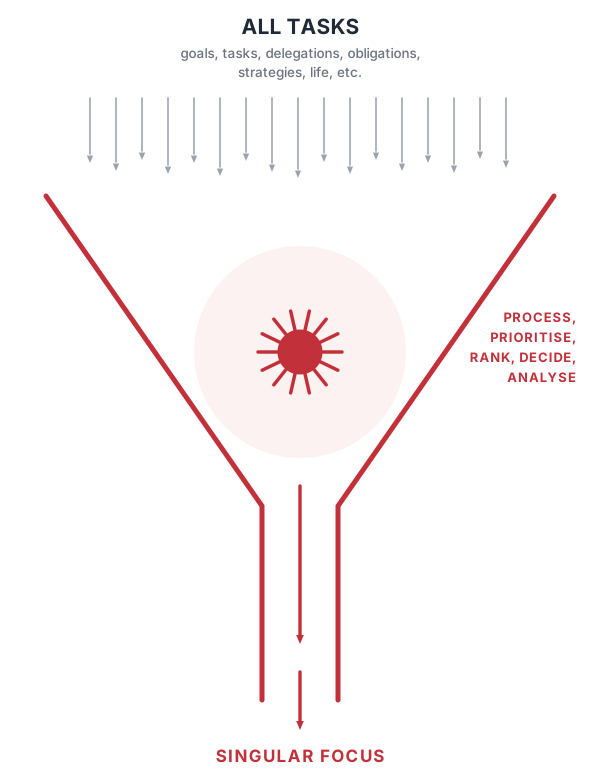
So reality (or life) actually looks like the diagram below: a whole lot of stuff coming at us with no rhyme or reason, and us trying to get things done. Without planning or process, tasks conflict with each other and in the end we achieve very little. The noise overwhelms us, we lose focus, distractions abound, and we are drip-fed tasks that may or may not be important, may or may not be urgent, and may or may not be our priority.
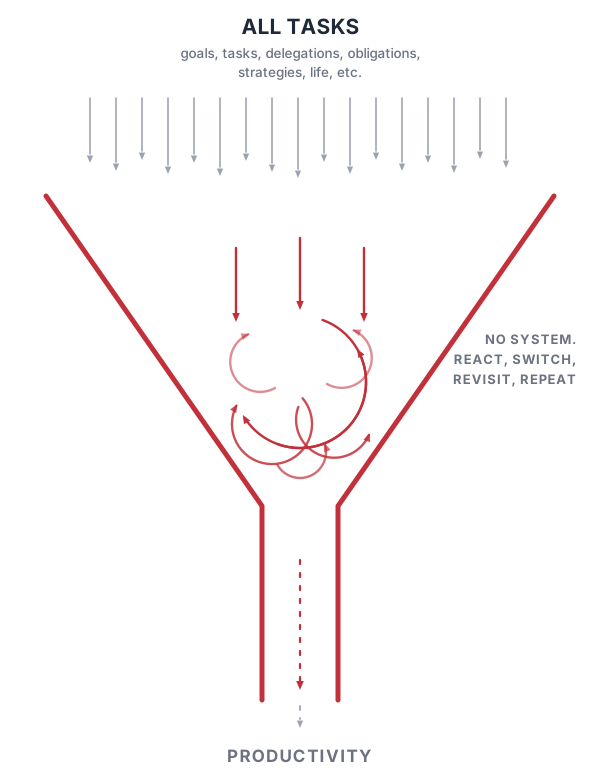
We need to apply planning and process — and then actually implement them — to manage our time and our lives effectively and efficiently.
We need to intervene to ensure our process looks like the diagram below.